
Blog
01
August 2026
Neelakurinji Bloom in Munnar 2026: Best Places to See the Purple Hills
Neelakurinji Bloom in Munnar 2026: A Rare Purple Season Returns to the Hills
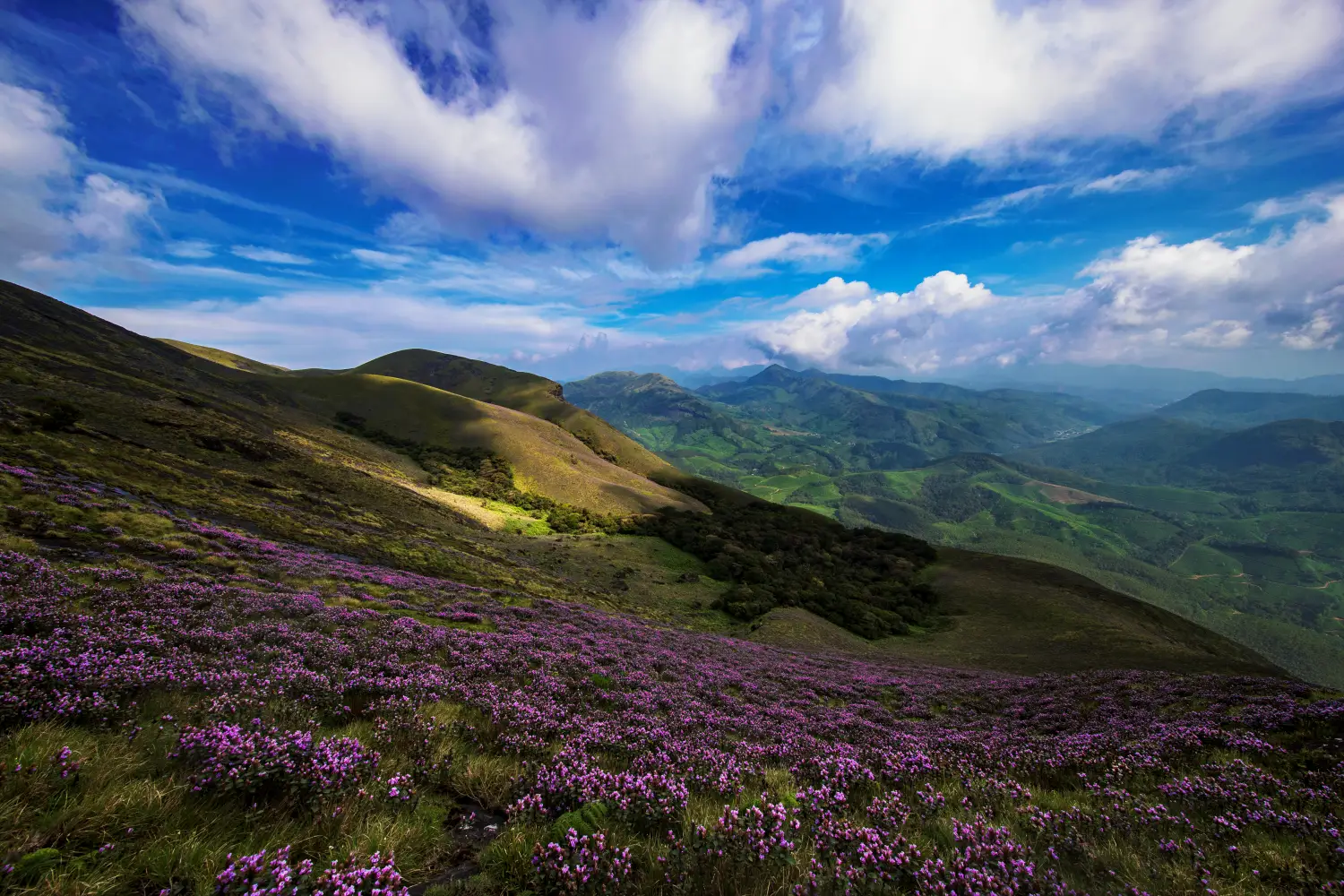
Munnar, Kerala, is witnessing one of its most anticipated natural spectacles of 2026 - the return of the rare Neelakurinji bloom. After nearly 12 years, sections of the high-altitude hills around Munnar are once again turning shades of blue and violet as Strobilanthes kunthiana comes into flower.
For travellers planning a trip to Munnar in September 2026, this is a particularly special time to visit. The current flowering has been reported in areas including Chokramudi Hills and the Mattupetty–Korandakkad mountain region, creating striking patches of purple-blue across the Western Ghats.
If you have been searching for Neelakurinji bloom in Munnar 2026, where to see Neelakurinji in Munnar, or the best time to visit Munnar for the Kurinji season, this guide covers what you need to know before planning your trip.
What is Neelakurinji?
Neelakurinji, scientifically known as Strobilanthes kunthiana, is a flowering shrub associated with the high-altitude grasslands and shola ecosystems of the Western Ghats.
What makes the flower extraordinary is its unusual flowering cycle. Neelakurinji is famous for blooming in large numbers at intervals of roughly 12 years, transforming mountain slopes into spectacular blue-violet landscapes.
The Munnar Forest Division describes Neelakurinji as a rare flowering shrub of the Western Ghats and identifies 2026 as the expected flowering year for the relevant local population.
Rather than producing a few scattered flowers throughout the year, large numbers of plants can flower around the same period. This mass flowering creates the unforgettable sight for which Munnar's Kurinji season is famous.
Neelakurinji Bloom in Munnar 2026
The 2026 flowering season has brought renewed attention to Munnar, with Neelakurinji being reported in several high-altitude areas.
Chokramudi Hills

Chokramudi Hills has emerged as one of the prominent places to experience the 2026 Neelakurinji season.
Located along the Munnar–Bodimettu route, Chokramudi offers a dramatic mountain setting where visitors can experience the flowers against the backdrop of the Western Ghats.
The Chokramudi Neelakurinji viewing area opens to visitors on 24 August 2026, and the attraction has already seen significant visitor interest. Reports in late August indicated that more than 4,000 visitors had arrived within five days.
Mattupetty - Korandakkad
The Mattupetty - Korandakkad hills are another important area associated with the 2026 flowering.
Reports from early September confirmed flowering in the Korandakkad mountain region near Mattupetty. Some sections are located on privately controlled land, so visitors should follow local access rules and obtain the necessary permission rather than entering restricted areas.
Around Munnar Town
Neelakurinji has also been reported in and around parts of Munnar town, including areas around Ikka Nagar and Engineering College Road, adding occasional patches of blue-violet colour closer to the main town.
Because flowering intensity varies from one location to another, travellers should check the latest local conditions before setting out.
When is the Best Time to See Neelakurinji in Munnar?
The Neelakurinji flowering period is generally associated with the August–October window, although the exact timing and intensity can vary depending on location, weather and elevation.
For the 2026 season, flowering has been progressing through late August and September. Reports from Chokramudi indicated that more extensive flowering was expected as the season progressed, particularly after periods of rain.
Planning a September 2026 Munnar trip?
September is an excellent month to consider if your primary reason for visiting is to experience the 2026 Neelakurinji season.
However, nature does not follow a fixed tourist calendar. Flowering can vary between locations, so it is best to check current local updates before travelling to a specific viewing area.
Is Neelakurinji Blooming at Eravikulam National Park in 2026?
This is an important question because there is often confusion surrounding the different flowering cycles in Munnar.
The 2026 Neelakurinji bloom should not automatically be considered the next major Eravikulam/Rajamalai flowering.
Different populations of Neelakurinji in the Munnar high ranges can have different flowering cycles. The current 2026 flowering being reported at places such as Chokramudi and Mattupetty–Korandakkad is distinct from the flowering cycle associated with Eravikulam National Park.
Current travel information indicates that the next major flowering at Eravikulam/Rajamalai is expected around 2030.
Therefore, travellers should check the specific location before assuming that every Neelakurinji site around Munnar will be in full bloom.
Why Does Neelakurinji Bloom Only Once in About 12 Years?

The long flowering cycle is one of the most fascinating aspects of Neelakurinji.
The plants can remain part of the high-altitude landscape for years before large-scale flowering occurs. When the flowering period arrives, numerous plants bloom around the same time, creating the characteristic mass-flowering phenomenon.
This unusual natural cycle also explains why a Neelakurinji season is considered a once-in-a-generation travel experience.
The 2026 flowering follows previous flowering records for some Munnar populations, including the Mattupetty–Kannimala region, which recorded flowering in 1990, 2002 and 2014, pointing towards a 2026 cycle.
Why Neelakurinji is Important to Munnar's Ecosystem
Neelakurinji is much more than a beautiful flower for photographs.
The plant is closely associated with the shola-grassland ecosystem of the Western Ghats, a globally important biodiversity region. The mass flowering cycle is part of the ecological rhythm of these high-altitude landscapes and provides resources for pollinators.
This makes responsible tourism especially important during the 2026 flowering season.
Visitors should:
- Stay on designated paths and viewing areas.
- Never uproot or damage plants.
- Avoid picking Neelakurinji flowers.
- Follow Forest Department and local authority instructions.
- Avoid littering in the hills.
- Respect private-property restrictions.
- Avoid disturbing wildlife.
- Take photographs without stepping into flowering patches.
The goal is simple: enjoy the bloom without damaging the landscape that makes it possible.
How to Plan a Neelakurinji Trip to Munnar in 2026
If you are planning a Munnar holiday specifically to experience the Neelakurinji bloom, consider allowing at least 2–3 days in the region.
This gives you enough time to explore Munnar's major attractions while keeping some flexibility for changing weather and flowering conditions.
A typical Munnar itinerary can include:
Day 1 – Munnar Town
Arrive in Munnar, check in to your hotel or resort and explore Munnar town, local viewpoints and nearby attractions.
Day 2 – Neelakurinji Experience
Plan your visit to a permitted Neelakurinji viewing area such as Chokramudi, subject to current access and local conditions.
Day 3 – Munnar Nature & Tea Country
Explore the tea plantations, viewpoints, waterfalls, forests and other attractions around Munnar.
Keeping your itinerary flexible is particularly useful during the monsoon and post-monsoon period, when mountain weather can change quickly.
What Should You Carry?
For a Neelakurinji trip, comfortable and practical clothing is more important than elaborate trekking equipment.
Carry:
- Comfortable walking shoes with good grip
- Light rain protection
- A small backpack
- Drinking water
- Sunscreen
- A hat or cap
- Camera or smartphone
- Power bank
- Light warm clothing for Munnar's cooler evenings
If your chosen viewing location involves trekking or a significant walk, check the current route conditions before starting.
Where Should You Stay in Munnar?
Choosing the right place to stay can make your Neelakurinji trip much more comfortable.
Maat Hotels & Resorts offers multiple accommodation options in and around Munnar, allowing travellers to choose between nature retreats, budget-friendly stays, farm experiences, scenic resorts and premium accommodation.
Depending on your travel style, you can consider properties from the Maat Hotels & Resorts collection in Munnar, including:
- The View Munnar by Maat Hotels – for travellers looking for scenic valley and town views.
- Blue Bells Resort by Maat Hotels – a nature-focused stay surrounded by greenery.
- Spice Jungle Resort by Maat Hotels – a nature resort experience with a pool and jungle ambience.
- Ela Ecoland Nature Retreat – an eco-oriented stay surrounded by plantation landscapes.
- Dew Drops Farm Resort Munnar – a farm and plantation experience close to nature.
- The Feel Munnar Resort & Spa – a premium hilltop resort experience overlooking the tea-country landscape.
- Sunrise Munnar by Maat Hotels – a comfortable Munnar stay with mountain views.
Staying in Munnar also gives travellers the flexibility to explore multiple attractions rather than visiting only for the flowers.
Neelakurinji 2026: A Rare Reason to Visit Munnar
Munnar is beautiful throughout the year, but a Neelakurinji flowering season adds something genuinely unusual to the experience.
For a short period, familiar mountain landscapes can look completely different as blue-violet flowers appear across the high-altitude slopes.
The 2026 Neelakurinji season is therefore an exceptional opportunity for nature lovers, photographers, families, trekkers and travellers who want to experience one of the Western Ghats' most remarkable natural events.
If you have been waiting for the next Kurinji season, 2026 is the year to plan your Munnar journey - while respecting the fragile landscape that makes the spectacle possible.
Frequently Asked Questions About Neelakurinji Munnar 2026
Is Neelakurinji blooming in Munnar in 2026?
Yes. Neelakurinji (Strobilanthes kunthiana) is flowering in several areas around Munnar during the 2026 season, including Chokramudi and the Mattupetty–Korandakkad region.
Where can I see Neelakurinji in Munnar in 2026?
Chokramudi Hills is one of the prominent viewing areas for the 2026 bloom. Flowering has also been reported around Mattupetty–Korandakkad and some areas closer to Munnar town. Access to particular locations may depend on local permissions and current regulations.
When is the Neelakurinji season in Munnar?
Neelakurinji generally flowers during the August–October period, although the exact timing varies by location and weather. The 2026 season has been active from late August and is continuing into September.
Does Neelakurinji bloom every year?
No. Neelakurinji is famous for its approximately 12-year flowering cycle, although different populations and related Kurinji species can have different flowering schedules.
Will Neelakurinji bloom at Eravikulam National Park in 2026?
The 2026 bloom being reported around Chokramudi and Mattupetty–Korandakkad should not be confused with the next major Eravikulam/Rajamalai flowering cycle, which is currently expected around 2030.
Can I pick Neelakurinji flowers?
No. Visitors should not pick, damage or uproot the flowers. Follow designated paths and all instructions from the Forest Department and local authorities.
Is September 2026 a good time to visit Munnar?
Yes. September offers travellers the opportunity to experience the ongoing 2026 Neelakurinji season along with Munnar's tea plantations, mountain landscapes, waterfalls and other attractions. Flowering conditions should be checked shortly before visiting a specific site.
Experience Munnar During the 2026 Neelakurinji Season
The Neelakurinji bloom is not simply another seasonal attraction. It is a reminder of how extraordinary the natural landscapes of the Western Ghats can be.
If you are planning a Munnar trip in September or October 2026, consider adding a Neelakurinji experience to your itinerary and give yourself enough time to explore the wider beauty of Munnar.
Stay with Maat Hotels & Resorts and discover Munnar during one of its rarest and most beautiful seasons.

Leave a Comment